Mass Timber Carbon Calculator
Developed For: Corgan's R&D team and Education studio to support a comprehensive research study into the physiological impacts of chronic health conditions and the impact of learning environments on teachers.
Notable Features
Embedded into Corgan’s website for public use
Deployed using Azure DevOps pipelines for automated builds
Implemented custom interactive diagrams and branded data visualizations using D3.js

Overview
A front-end analytical platform to model the true embodied carbon impacts of mass-timber construction. The tool extends conventional life-cycle assessment approaches by incorporating forestry-stage emissions, including biomass waste (“slash”) generated during timber harvesting. The system enables design teams to evaluate how species selection, transportation distance, and harvesting practices influence the carbon footprint of a timber building.
The application integrates a carbon accounting model with an interactive interface that allows users to explore scenario-based inputs and compare environmental outcomes in real time. By expanding the carbon accounting boundary back to forest harvesting processes, the tool provides a more complete understanding of the environmental implications of mass-timber design decisions.
Impact:
Provided Corgan with a more rigorous framework for evaluating mass-timber sustainability claims
Expanded internal capability around embodied carbon analytics
Supported sustainability research and client-facing design analysis
Development Challenges
Required multiple pages of content in a single page application without scrolling. Corgan’s website is a Drupal CMS, managed by a third party marketing firm. The site’s architecture does not cater to dynamic webpages, so the application had to be deployed as a microsite, embedded into the Corgan website via Iframe.
Iframe embedding meant the application needed to avoid nested scrolling and there would be no routing between pages. This presented the challenge of designing an application with multiple pages of content, within a single, static application.
Solutions
A nonconventional approach to mimic separate pages with React state-managed, dynamic divs that expand and collapse upon button click events. This provided the appearance of navigating between individual pages in the application without routing to separate pages.
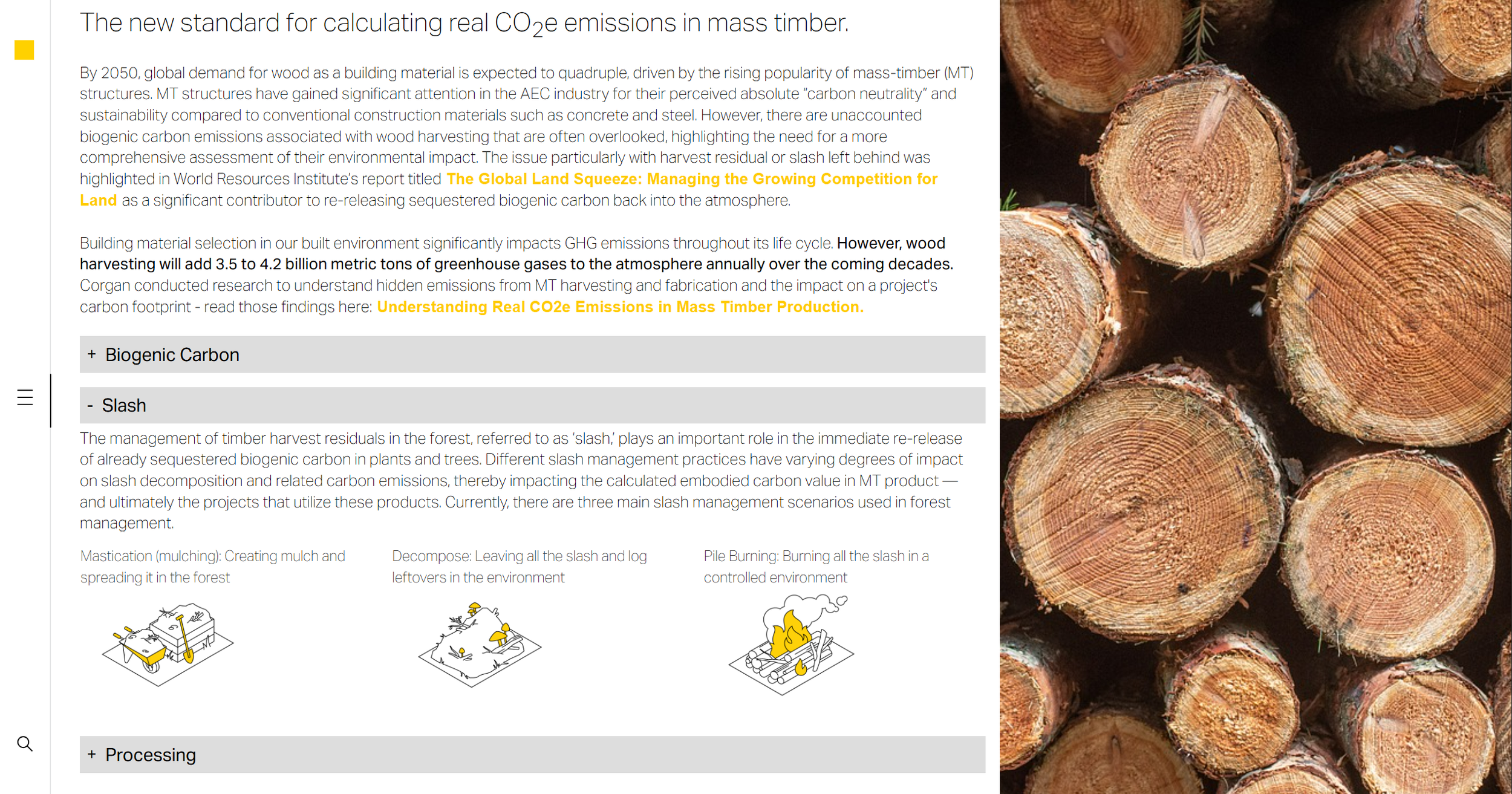
Overview page with links to the white paper and expandable divs.
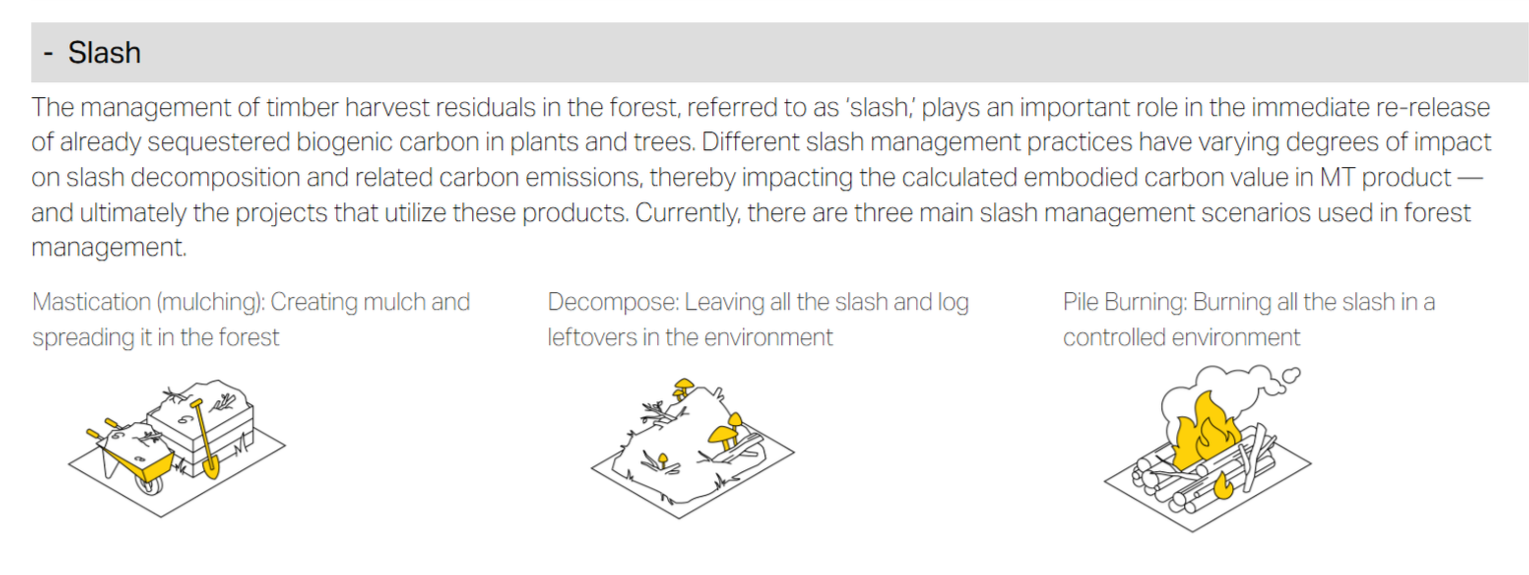
Expanded content contains diagrams from Corgan’s marketing team, definitions and descriptions.
The user controls the building’s floor plate size and level count with sliders and material and waste-handling selections with dropdowns. Upon each selection, the calculator recomputes outputs and adjusts visuals in real time.
The calculator consists of a side panel for user selections and dynamically adjusted D3.js visuals.
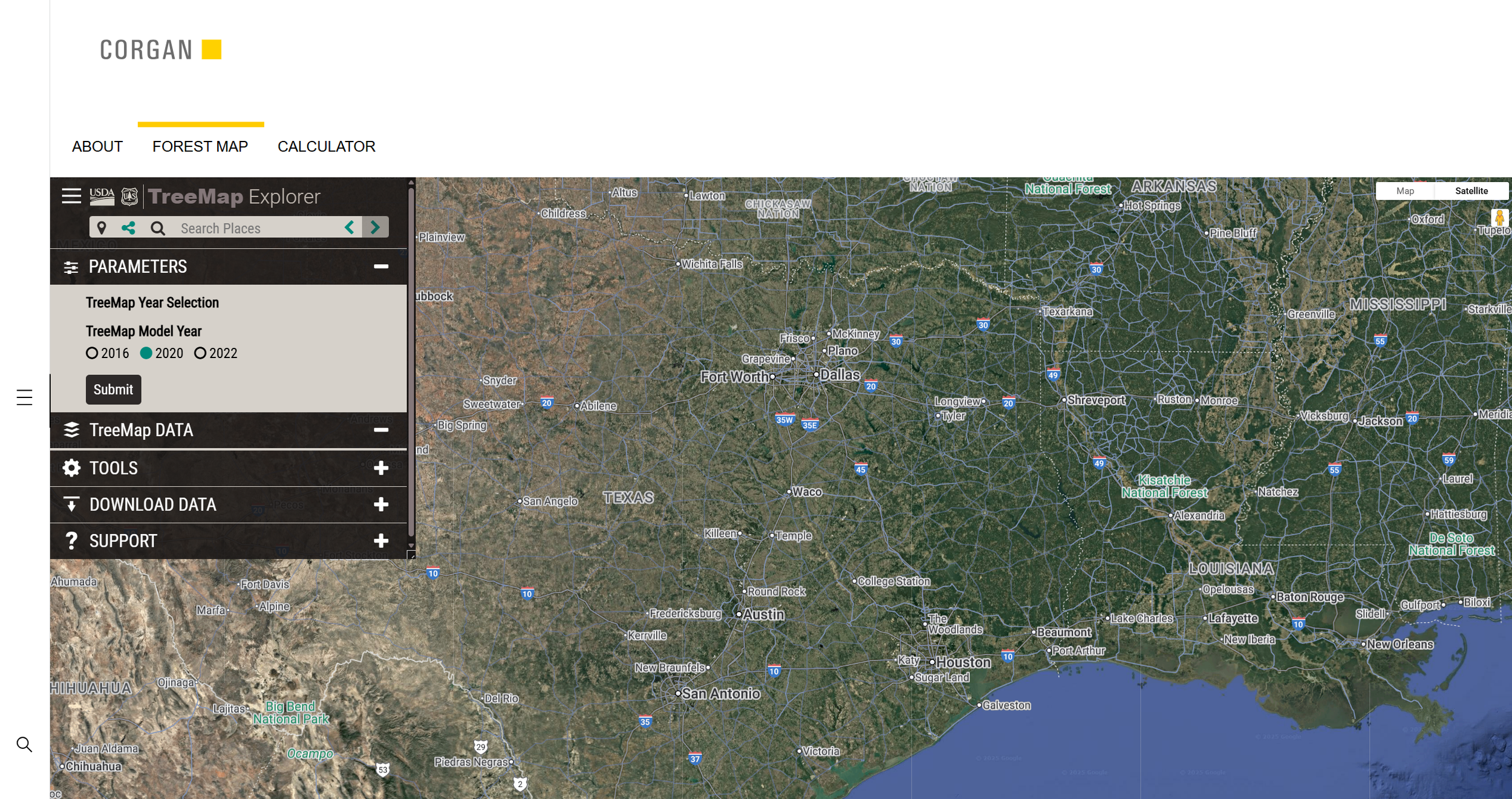
The Forest Map section includes an embedded forestry map from the US Forestry Service to provide more context about domestic forestry and wood supply.
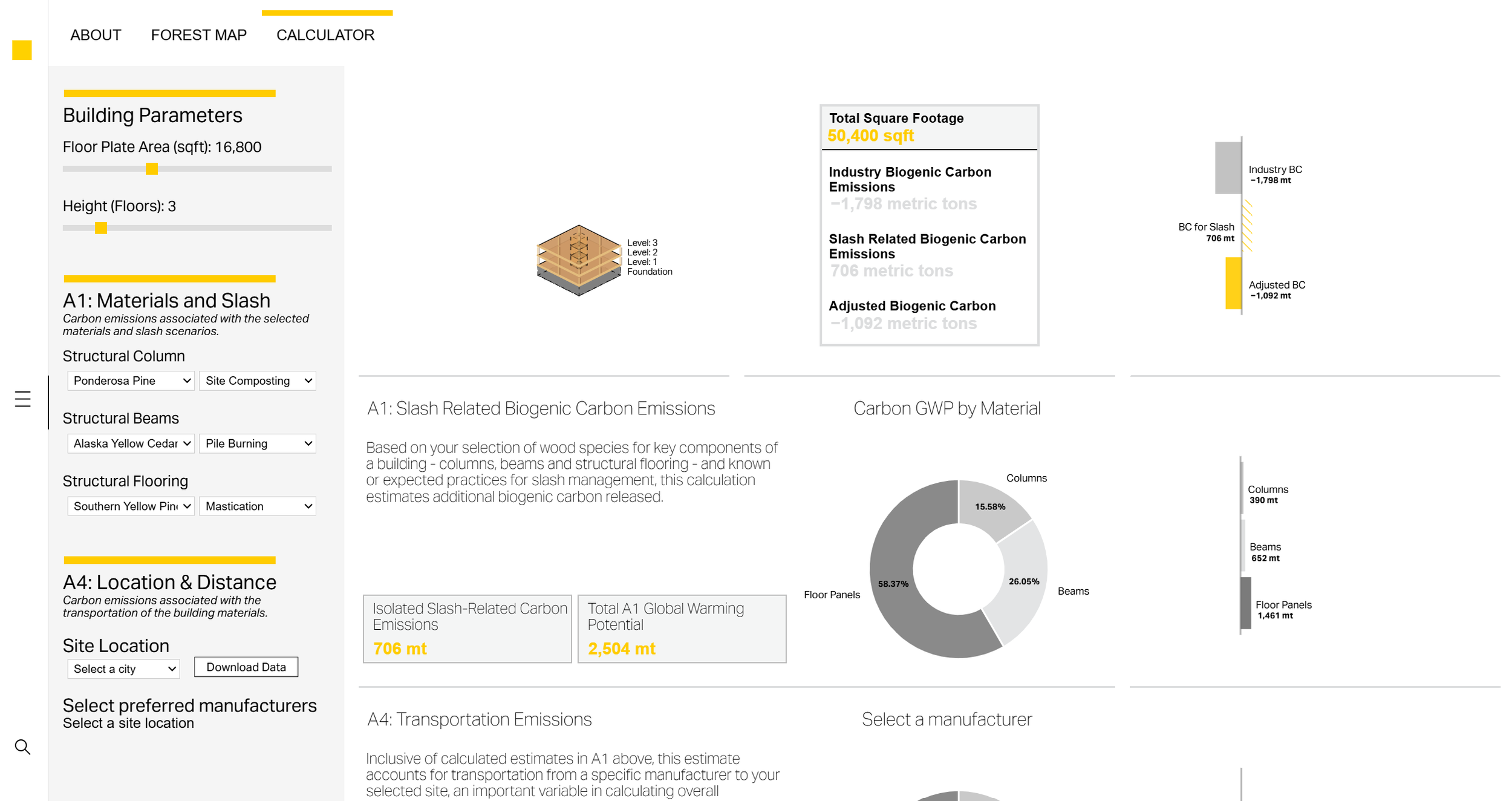
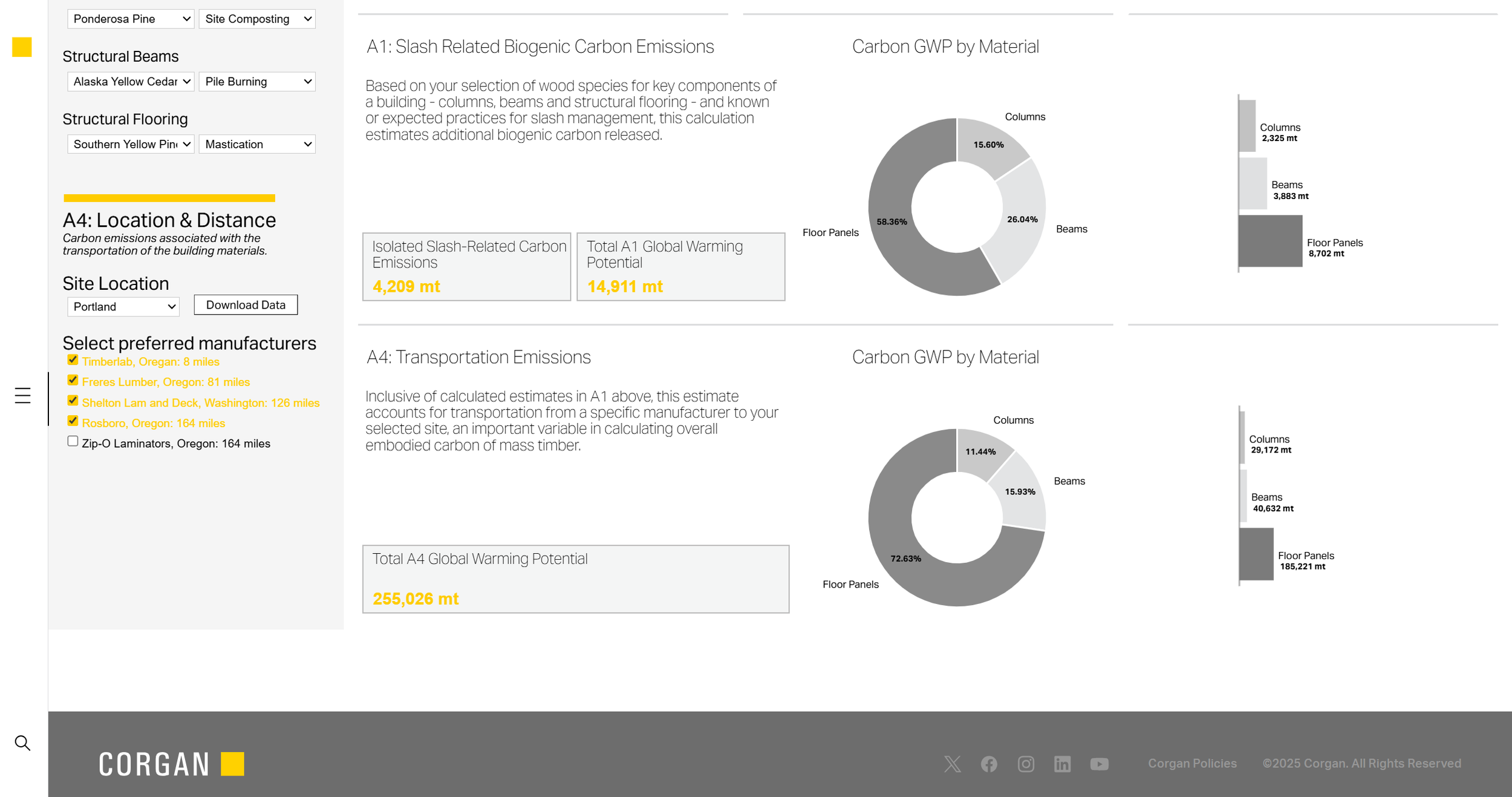
The user can set their project site location and select nearby mass timber suppliers. The calculator adjusts carbon calculations to include transportation related emissions.
Finally, the user can download the results as csv and upload to OneClick LCA or similar tracking tools.